Pedicure is not just an aesthetic treatment: it contributes to daily comfort, foot health, and overall well-being, in a country where walking and heat put significant stress on the lower limbs.
History and identity of pedicure in Senegal
Although modern pedicure is inspired by international standards, Senegal has a long tradition of body care, particularly through the use of natural ingredients such as shea butter, coconut oil, kaolin, or sea salt.
With the rise of beauty salons in the 1990s, followed by the boom of spas in the 2010s, pedicure has modernized: aromatic foot baths, professional exfoliations, electric devices, and techniques inspired by Asian or European care.
Today, pedicure is a common ritual, appreciated by both women and men, for aesthetics, hygiene, and relaxation.
Professional life and beauticians’ expertise
Beauticians specializing in pedicure are trained in beauty schools or through traditional apprenticeship.
They master:
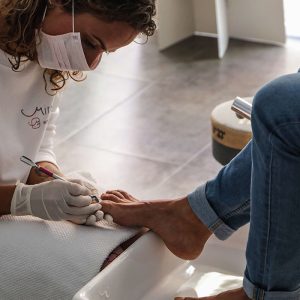
- Classic treatments (nail filing, callus removal, massage),
- Spa treatments (aromatic bath, exfoliation, hydrating mask),
- Modern techniques such as semi-permanent polish or paraffin care.
Customer relations remain central: interaction, advice, a warm atmosphere, and often conversations about beauty, fashion, or daily life in Senegal.
Culture and beauty trends
In Senegal, pedicure is often accompanied by a manicure, a hydrating mask, or a foot massage.
Current trends include:
- Semi-permanent nail polish, highly appreciated for its long-lasting wear,
- Bright colors (red, pink, royal blue) or nude shades,
- Spa treatments inspired by African rituals,
- Relaxing pedicures with warm shea or coconut oils.
In some salons, a foot treatment can be a true therapeutic moment: conversations, soft music, scented ambiance, or mbalax music in the background depending on the neighborhood.
Iconic places for a pedicure in Senegal
- Dakar: Plateau, Almadies, Sacré-Cœur, Médina, Mermoz
- Saly & Petite Côte: hotel spas, independent institutes
- Thiès, Kaolack, Saint-Louis: modern and traditional salons
- Hotels and resorts: premium services
Each salon has its own style: popular, chic, traditional, modern, or luxury spa.
Anecdotes about pedicure in Senegal
- In some neighborhoods of Dakar, pedicures start with a bath of scented leaves, a local tradition to purify and soften the skin.
- Many beauticians recall that the first step in their training was learning foot massage, a skill highly appreciated by clients.
- Some clients book their pedicure before religious holidays (Tabaski, Korité, Christmas), turning salons into lively and festive places.
What to do during a pedicure session?
- Enjoy a warm foot bath to relax the muscles.
- Indulge in an exfoliating scrub to remove dead skin.
- Observe the meticulous technique of callus removal.
- Appreciate the foot massage, a highlight of the treatment.
- Choose a classic or semi-permanent polish, or leave nails natural.
- Finish with advice on hydration and foot care.
Practical information
Duration: 30 to 60 minutes depending on the type of pedicure.
Average prices: vary depending on the salon and city.
Equipment used: aromatic bath, pumice stone, file, exfoliation, natural oils.
Accessibility: salons reachable by taxi, bus, or on foot in major cities.
Tips: avoid closed shoes immediately after applying nail polish; prefer sandals.
FAQ
Why get a pedicure?
For foot health, aesthetics, hygiene, and relaxation.
Pedicure vs. spa pedicure, what’s the difference?
Spa pedicure includes aromatic bath, exfoliation, mask, and extended massage.
Can men get a pedicure?
Yes, more and more men are opting for it for comfort and well-being.
Is booking necessary?
Recommended in large salons, especially on weekends.
Online booking with a deposit is often offered.
Recommended frequency?
Every 3 to 4 weeks for regular maintenance.